
The Art of the Sustainable Landscape: Prioritizing Irrigation Water Conservation
In the semi-arid climate of the West, water isn’t just a utility—it’s a finite treasure. Homeowners often feel they’re caught in a tug-of-war between maintaining a lush, emerald sanctuary and practicing responsible environmental stewardship. However, the modern landscape industry has evolved past this binary choice. Today, achieving a high-end, breathtaking outdoor space depends entirely on how well a property integrates irrigation water conservation into its core design.
When you look at the work of industry leaders like Colorado Outdoor Environments or Southern Landscape, you see a common thread: beauty isn’t skin deep. It’s supported by sophisticated engineering that respects local ecosystems. This article explores why choosing a partner committed to smart water use is the most important decision you’ll make for your property’s longevity and aesthetic appeal.
The Evolution of Irrigation Water Conservation in Modern Design
Historically, many viewed water-saving measures as a compromise. The word xeriscaping often conjured images of nothing but rocks and a few lonely cacti. Fortunately, those days are long gone. True irrigation water conservation is about precision, not deprivation. It involves utilizing the right amount of water at the right time, ensuring that every drop serves a physiological purpose for the plant life it sustains.
Premium landscape firms now approach water management as a foundational pillar of their craft. They understand that a poorly managed system doesn’t just waste water; it actually harms the landscape. Over-saturation leads to shallow root systems, fungal diseases, and soil compaction. By focusing on efficiency, these companies create environments that are more resilient against drought, pests, and the fluctuating temperatures typical of Colorado and the Southern United States.
Why Intelligent Planning Matters
The journey toward a sustainable yard begins long before the first shovel hits the dirt. It starts with a comprehensive site analysis. Professionals look at soil composition, microclimates, and topography to determine how water will move across the land. Without this initial phase, any attempt at saving water is just guesswork.
A company that prioritizes the health of the land will group plants with similar hydration needs together—a practice known as hydrozoning. This ensures that your lavender isn’t drowning while your hydrangeas are thirsty. It’s an elegant solution that maximizes the impact of your irrigation water conservation efforts while keeping maintenance needs to a minimum.
The Technology Driving Irrigation Water Conservation
We’re living in a golden age of outdoor technology. If your current sprinkler system operates on a simple “on/off” timer regardless of the weather, you’re missing out on significant benefits. High-end firms integrate smart controllers that function as the brain of your landscape.
These controllers use local weather data and on-site sensors to adjust watering schedules in real-time. If there’s rain in the forecast or if the soil moisture levels are already optimal, the system skips a cycle. This level of irrigation water conservation isn’t just good for the planet; it preserves the structural integrity of your hardscapes and prevents the nutrient leaching that occurs with excessive runoff.
Precision Delivery Systems
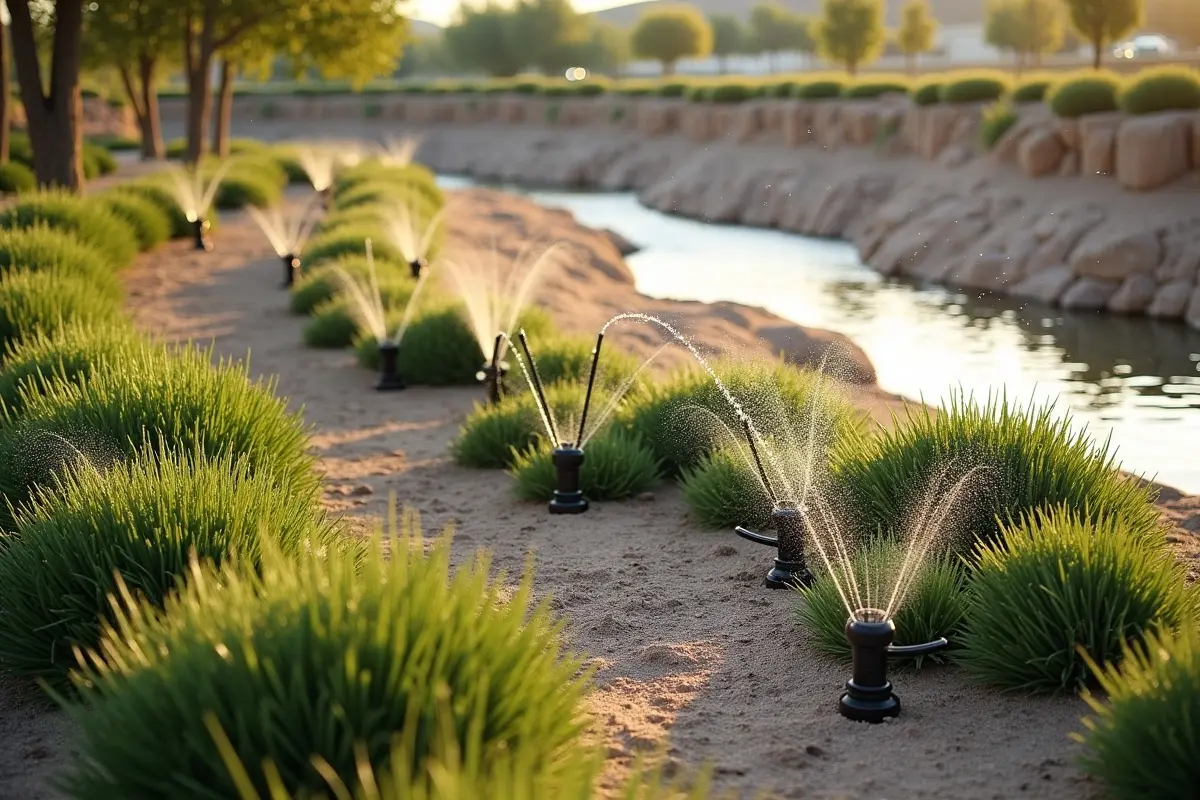
Beyond the controller, the hardware used to deliver water has seen massive upgrades. Traditional spray heads are often inefficient, losing a large percentage of water to wind drift and evaporation. Modern alternatives, such as multi-stream rotary nozzles and sub-surface drip irrigation, are game-changers.
Drip irrigation, in particular, is a masterclass in efficiency. By delivering water directly to the root zone, it eliminates waste and keeps foliage dry, which reduces the risk of leaf-borne diseases. When you choose companies like Colorado Outdoor Environments or Southern Landscape, you’re investing in these high-performance systems that treat water as a precious resource rather than a disposable commodity.
Balancing Aesthetics and Irrigation Water Conservation
There’s a common misconception that a water-wise yard lacks color or variety. In reality, some of the most stunning landscapes in the country are those that embrace native and adaptive species. These plants have spent thousands of years evolving to thrive in their specific environments. They offer a sense of place that exotic, water-hungry species simply can’t match.
Landscape design in Austin, Aspen, or anywhere with limited precipitation requires a team that specializes in irrigation water conservation and uses a diverse palette of textures and tones. From the silver-blue hues of mountain grasses to the vibrant blooms of perennials, these gardens are alive with movement and seasonal interest. Because these plants require less supplemental water, they’re often hardier and more vibrant than their pampered counterparts.
The Role of Hardscaping and Mulching
A well-designed landscape isn’t just about plants. Hardscapes—like patios, walkways, and retaining walls—provide structure and reduce the overall footprint of thirsty turfgrass. When combined with high-quality organic mulches, these elements help retain soil moisture and suppress weeds.
Mulch acts as a protective blanket for the earth. It regulates soil temperature, preventing the roots from baking in the summer sun or freezing during a sudden cold snap. By incorporating these elements, a landscape architect creates a multi-layered defense system that naturally bolsters your irrigation water conservation strategy.
The Long-Term Value of Efficient Water Management
Choosing a firm that values efficiency is an investment in your home’s future value. As water rates continue to rise and municipalities implement stricter usage guidelines, properties with established, water-efficient landscapes will become increasingly desirable. A home that boasts a lush, thriving garden without a massive monthly water bill is a rare and valuable asset.
Furthermore, there’s the intangible benefit of peace of mind. Knowing that your outdoor oasis isn’t a drain on local resources allows you to enjoy it more fully. Whether you’re hosting a summer dinner party on a custom patio or watching the sunset over a manicured lawn, the knowledge that your space is sustainable adds a layer of satisfaction that money can’t buy.
Selecting the Right Partner
Not every landscaping company is equipped to handle the complexities of modern water management. It requires a deep understanding of horticulture, hydraulics, and local ecology. When vetting potential partners, it’s essential to ask about their approach to irrigation water conservation. Do they offer smart system audits? Are they familiar with the latest low-flow technologies? Do they prioritize native plantings?
Firms like Colorado Outdoor Environments and Southern Landscape have built their reputations on this exact expertise. They don’t see water conservation as an afterthought or a checkbox; they see it as the foundation of a premium outdoor experience. They understand that a landscape is a living, breathing entity that requires a thoughtful balance of art and science.
A Greener Future for Your Home
The beauty of your outdoor space shouldn’t come at the cost of the environment. By embracing the principles of irrigation water conservation, you can have a landscape that is both breathtaking and responsible. It’s about making smarter choices—from the plants you select to the technology you install.
When you work with professionals who respect the land, you’re doing more than just beautifying your home. You’re contributing to a larger movement of conservation that ensures our natural landscapes remain vibrant for generations to come. Your yard can be a sanctuary of luxury and a model of efficiency, proving that in the world of high-end design, the greenest choice is often the most beautiful one.